Election 2026: Arvada, Jeffco, and Colorado ballot guide
Learn more about the candidates and ballot initiatives below that will be on the Arvada residents’ ballot in November 2026. (Last updated 09-24-2026)

Learn more about the candidates and ballot initiatives below that will be on the Arvada residents’ ballot in November 2026. (Last updated 09-24-2026)
View the full ballot measure research and recommendations presentation, or watch the meeting where we discuss each measure.
APA has endorsed a vote YES on this ballot measure.
Ballot language:
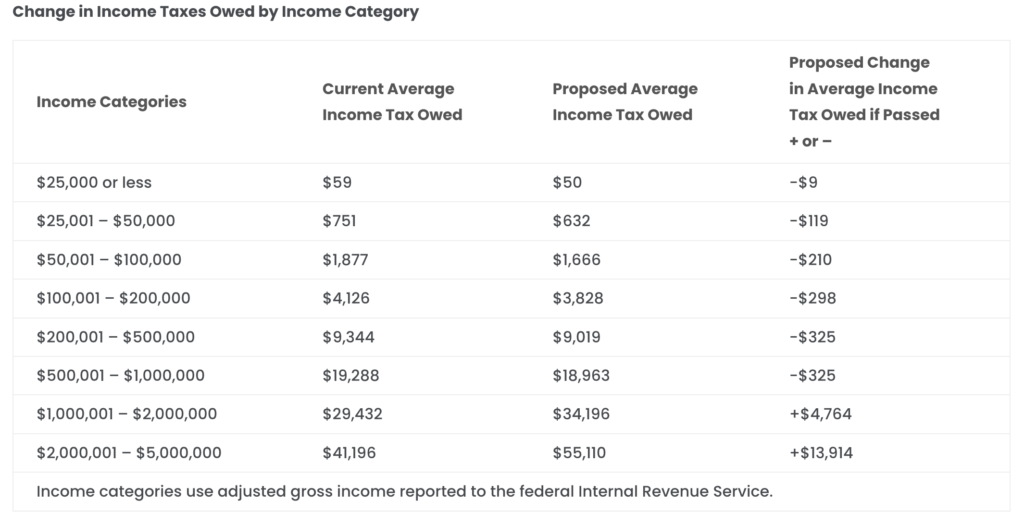
Shall state taxes be increased $2.7 billion annually, in order to increase or improve levels of public services, including K-12 public school education, health care, and early child care and education services, by an amendment to the Colorado Constitution and a change to the Colorado Revised Statutes repealing existing law and creating new law to replace the unifore state income tax rate with a graduated income tax structure, and, in connection therewith, amending the Taxpayer’s Bill of Rights to eliminate the constitutional requirement for all taxable net income to be taxed at one rate with no added tax on income; establishing various income tax rates based on the amount of taxable income earned by individuals, estates, trusts, and corporations, while maintaining the current 4.4% tax on Income from the sale of principal residence, which will result in the estimated change in the income taxes owed by individuals as identified in the following table, and authorizing the state to retain and spend any increased revenue from the new tax structure, as a voter-approved revenue change, to supplement current levels of funding for K-12 public school education, health care, and early child care and education programs?
Background information:
The Protect Colorado’s Future coalition circulated petitions for signatures to get Initiative #195 on the ballot (now Amendment 87). It strikes the requirement from TABOR that requires all taxable net income to be taxed at one rate with no added tax. And replaces Colorado’s flat income tax system with a new set of tax brackets and rate for individuals and corporations. Requires an annual audit. Raises and Estimated $2 billion per year for K-12 education, health care, and early childcare and education.
Arguments for:
97% of Coloradans will pay less in taxes. Only those making more than $500,000 will pay a little more, which makes the tax system fairer. Aligns Colorado with Federal and 27 other states’ tax systems. Raise $2 billion for education, healthcare, and childcare, which addresses past underfunding.
Other endorsing groups:
Bell Policy Center, Colorado Statewide Parent Coalition, Great Education Colorado Action, Colorado PTA, Engage Jeffco Schools
APA has endorsed a vote YES on this ballot measure.
Ballot language:
Shall state investment in K-12 public education increase two percent each year for the next ten years, with investments used to increase teacher pay, improve teacher retention, lower class sizes, and increase access to career and technical courses, without raising taxes but instead funded by raising the annual limit on state fiscal year spending only by the amount spent on public K-12 education as a voter-approved revenue change, and requiring an annual publicly released, independent audit to show how the new investments are spent?
Background information:
For that past nearly 15 years, Colorado underfund every student by about $4,600 each year. Resulting in an annual statewide shortfall of $4 billion dollars. (Two independent studies confirm this). Colorado ranks 50th in the nation and at the bottom nationally in teacher wage competitiveness. This ballot measure:
Arguments for:
Vote yes on Prop NN to raise the Colorado’s outdated revenue cap and allow the state to invest the revenue it ALREADY collects in K-12 public education without raising taxes. For more than 30 years this cap has limited how much Colorado can invest in public schools, contributing to larger class sizes, educator shortages, and fewer resources for students.
Other endorsing groups:
CEA and JCEA, Colorado and Jeffco PTA, National Education Association, Great Education Colorado, United New Economy, Stand for Children, Engage Jeffco Schools
APA has endorsed a vote YES on this ballot measure.
Ballot language:
BALLOT ISSUE 5[A] Shall Jefferson County School District R-1 taxes be increased $73 million in 2026 for collection in 2027, and by such amounts in subsequent years that will produce, when combined with prior mill levy override amounts, up to the limit established for the district by Section 22-54-108(3)(b)(VI), C.R.S., with such funds to be used for the purposes authorized by Section 22-54-108, C.R.S., such as the following:
And shall the spending of such taxes be reviewed by a board-appointed citizens’ committee for accountability, summarized in annual public reports, and posted publicly on a website for full transparency;
From the imposition of a mill levy imposed at a rate which will generate revenues up to the limit established for the district by Section 22-54-108(3)(b)(VI), C.R.S., and shall the additional revenues be deposited in the general fund and used for educational purposes as provided herein, as previously approved by the district voters pursuant to Section 22-54-108(V), C.R.S., and as authorized by state law; and shall the revenue from such taxes and any earnings from the investment thereon be collected and spent as voter-approved revenue change under Article X, Section 20 of the Colorado Constitution and any other law?
Background information:
Jeffco has a significant disadvantage compared to neighboring districts that have already passed MLOs. – $1,878 less in public funding per student than neighboring Front Range School Districts – $140 million approximate annual funding gap compared to neighboring districts – Ranks 9 out of 10 among neighboring Front Range Districts in median teacher salary.
5A – $73 million Mill Levy Override (MLO) — for teacher/staff compensation, recruitment, and retention. Also career/technical education, and student programming.
5B – $60 million Special Purpose Mill — for building maintenance (roofs, heating/cooling, hazard mitigation of aging buildings), capital improvements, technology, safety and security, and repairs.
What would it cost a homeowner? (Calculator for school funding measures)
$3.50 per month for every $100,000 of your home’s actual value. Calculator
Home value Monthly increase Annual increase
$500,000 – $17.50 – $210
$600,000 – $21.00 – $252
$750,000 – $26.25 – $315
$1,000,000 – $35.00 – $420
Arguments for:
We are losing good teachers and staff to neighboring districts. Teachers and staff deserve to be able to afford to live in the communities where they teach, and they currently can’t with their salary. Students go to school in buildings that were built in the 1950s. The school’s current budget covers only year-to-year bare minimum maintenance. We need more to make major HVAC upgrades, repairs, and safety additions. We demand safe and secure schools, but don’t have the funds to provide them. The district has already formed an accountability committee to keep track of these MLO funds/spending and provide transparency to the public.
Other endorsing groups:
Jeffco PTA, Engage Jeffco Schools, JCEA, JESPA, JCAA, Jeffco League of Women Voters
APA has endorsed a vote YES on this ballot measure.
Ballot language:
BALLOT ISSUE 5[A] Shall Jefferson County School District R-1 taxes be increased $73 million in 2026 for collection in 2027, and by such amounts in subsequent years that will produce, when combined with prior mill levy override amounts, up to the limit established for the district by Section 22-54-108(3)(b)(VI), C.R.S., with such funds to be used for the purposes authorized by Section 22-54-108, C.R.S., such as the following:
And shall the spending of such taxes be reviewed by a board-appointed citizens’ committee for accountability, summarized in annual public reports, and posted publicly on a website for full transparency;
From the imposition of a mill levy imposed at a rate which will generate revenues up to the limit established for the district by Section 22-54-108(3)(b)(VI), C.R.S., and shall the additional revenues be deposited in the general fund and used for educational purposes as provided herein, as previously approved by the district voters pursuant to Section 22-54-108(V), C.R.S., and as authorized by state law; and shall the revenue from such taxes and any earnings from the investment thereon be collected and spent as voter-approved revenue change under Article X, Section 20 of the Colorado Constitution and any other law?
Background information:
Jeffco has a significant disadvantage compared to neighboring districts that have already passed MLOs. – $1,878 less in public funding per student than neighboring Front Range School Districts – $140 million approximate annual funding gap compared to neighboring districts – Ranks 9 out of 10 among neighboring Front Range Districts in median teacher salary.
5A – $73 million Mill Levy Override (MLO) — for teacher/staff compensation, recruitment, and retention. Also career/technical education, and student programming.
5B – $60 million Special Purpose Mill — for building maintenance (roofs, heating/cooling, hazard mitigation of aging buildings), capital improvements, technology, safety and security, and repairs.
What would it cost a homeowner? (Calculator for school funding measures)
$3.50 per month for every $100,000 of your home’s actual value. Calculator
Home value Monthly increase Annual increase
$500,000 – $17.50 – $210
$600,000 – $21.00 – $252
$750,000 – $26.25 – $315
$1,000,000 – $35.00 – $420
Arguments for:
We are losing good teachers and staff to neighboring districts. Teachers and staff deserve to be able to afford to live in the communities where they teach, and they currently can’t with their salary. Students go to school in buildings that were built in the 1950s. The school’s current budget covers only year-to-year bare minimum maintenance. We need more to make major HVAC upgrades, repairs, and safety additions. We demand safe and secure schools, but don’t have the funds to provide them. The district has already formed an accountability committee to keep track of these MLO funds/spending and provide transparency to the public.
Other endorsing groups:
Jeffco PTA, Engage Jeffco Schools, JCEA, JESPA, JCAA, Jeffco League of Women Voters
APA has endorsed a vote YES on this ballot measure.
Ballot language:
Shall Front Range Passenger Rail District taxes be increased $295,000,000 annually and by whatever amounts are raised annually thereafter, and shall Front Range Passenger Rail District debt be increased $580,000,000, with a repayment cost of $785,000,000; To construct, operate, and maintain Colorado Connector (COCO) passenger rail service on Colorado’s Front Range and connect communities, including Pueblo, Colorado Springs, Sterling Ranch, Littleton, Denver, Westminster, Broomfield, Louisville, Boulder, Longmont, Loveland, and Fort Collins; in order to:
By establishing a 0.333% sales and use tax (equal to one third of a penny on a $1 purchase), with exemptions provided under Colorado law, including those for gasoline, food, residential electricity and gas, prescription drugs, and medical supplies;
And to retain all such revenues, public and private contributions, and any investment income on revenues and debt proceeds, as a voter-approved revenue change under Section 20 of Article X of the Colorado Constitution; And requiring that all such dedicated revenues be reviewed annually by an independent auditor and a rotating group of citizen taxpayers who live in the district?
Background information:
Appearing on ballots in the following counties: Adams, Arapahoe, Broomfield, Boulder, Denver, Douglas, El Paso, Huerfano, Jefferson, Larimer, Las Animas, Pueblo, and Weld.
This is a Senate Bill, referred to the voters (“tax increase”) by the Front Range Passenger Rail district board (14-1) -Referendum Per ColoradoConnector.com – “The first phase, called Starter Service, is targeted to begin in 2029 with three daily round trips between Fort Collins and Denver, stopping at eight stations. From there, service grows in phases: extending south to Colorado Springs and Pueblo and adding more trips over a roughly 20-year horizon, toward a full build of up to 10 daily round trips in the north. Just as important, that first phase is being built via existing funding commitments and being implemented now. So this isn’t a distant someday project – the first trains are on a near-term timeline.” “Full Service depends on new dedicated funding, which would come from a future ballot question in November 2026; this would be decided only by the communities closest to the permanent stations (they are the ones who would be voting on it).” “It is entirely different in its approach. CoCo is conventional intercity passenger rail that runs on mostly existing freight tracks — upgraded and shared with the railroads that own them — rather than a brand-new, dedicated high-speed line built from the ground up. Because the corridor is mostly already there, that means far lower cost, much less land acquisition, and a faster path to service.”
Arguments for:
Reduce traffic, reduce carbon emissions, we love public transportation; reduce DUI’s; Rail district officials estimate the train will have the same environmental effect as permanently taking 29,000 cars off the road by saving an estimated 233 million vehicle miles a year.
Other endorsing groups:
Coloradans for CoCo, CO Democratic Party
Ballot language:
Shall there be an amendment to the Colorado Constitution requiring law enforcement to notify the department of homeland security when a person is charged with either a violent crime or any crime if the person has a prior felony conviction if law enforcement cannot determine that the person is lawfully present in the United States?
Ballot Information:
Advance Colorado – introduced this amendment
Amendment 81 amends the constitution to mandate that law enforcement contact the federal Department of Homeland Security (DHS), the parent agency of Immigration and Customs Enforcement (ICE), within 72 hours if a person suspected of not having legal immigration status is charged with a crime of violence or the person is charged with any crime and has previously been convicted of a felony. This mandate applies to police officers, corrections officers, and attorneys and investigators working for district attorneys.
Arguments against:
Other Groups that Oppose:
League of Women Voters, Rocky Mountain Equality, Colorado Immigrant Rights Coalition (CIRC), Bell Policy Center
Ballot language:
Shall there be an amendment to the Colorado Constitution creating new law granting the right for consumers to purchase natural gas for cooking or heating in homes or businesses and for distributors and utilities to sell natural gas to consumers?
Ballot Information:
Advance Colorado – introduced this amendment
This Advance Colorado dark money initiative seeks to establish via an amendment to the Colorado constitution that “consumers have the right to purchase natural gas for cooking or heating in homes or businesses throughout the state” and that “utilities and distributors have the right to sell natural gas.”
Arguments against:
Other Groups that Oppose:
League of Women Voters, Conservation Colorado, Jeffco Dems
Ballot language:
Shall there be an amendment to the Colorado Constitution creating a constitutional right to hunt, fish, and harvest fish and wildlife by traditional methods, including all species of fish and wildlife managed by the state except non-game species, endangered species, or any species that is illegal to hunt under federal law, and, in connection therewith, establishing hunting and fishing as the preferred means of managing fish and wildlife populations; and preserving the right of the state to regulate hunting, fishing, and wildlife management if necessary for sound scientific wildlife conservation and management, public safety, or to preserve the future of hunting and fishing opportunities for all species?
Ballot Information:
The Wisconsin-based International Order of T. Roosevelt spent $1.5 million for this campaign to protect hunting and fishing as a constitutional right in Colorado. The group led similar campaigns that were successful in other states. 23 states have adopted hunt and fish amendments since 1996.
Arguments against:
Other Groups that Oppose:
Colorado Hunters & Anglers for Sensible Wildlife Conservation, Protect Colorado’s Constitution
Ballot language:
Shall there be an amendment to the Colorado Constitution requiring a voter to sign and include the last four digits of their social security number or their Colorado driver’s license or identification card number on the outside of their mail ballot for any federal or state election, and, in connection therewith, allowing the voter to correct missing or incorrect information, including with alternative forms of identification; and prohibiting a county clerk and recorder from counting the mail ballot unless the problem is fixed?
Ballot Information:
An Ohio dark-money group spent $2.2 million to support measure 84 tightening mail-voting rules.
It would require a voter to include either the last four digits of their Social Security number or their Colorado Real identification number Colorado Real identification driver’s license number or the last four digits of another form of Colorado identification that meets the requirements of the federal Real ID Act on the self-affirmation of a returned mail ballot. A voter who is provided the right to vote otherwise than in person by the Voting Accessibility for the Elderly and Handicapped Act may use identification approved under that act.
It would also require election officials to compare the information voters provide to the statewide voter registration database. If there is any discrepancy, the voter must be notified. The voter may provide a copy of their identification to correct the discrepancy, and the ballot cannot be counted until the discrepancy is corrected. In addition to the above items a U.S. passport, U.S. military ID card or tribal photo identification may be used.
Arguments against:
Other Groups that Oppose:
League of Women Voters of Colorado, Boulder County Board of Commissioners, Jeffco Dems
Read this news story about Amendment 84 in the Denver Post.
Ballot language:
Shall there be an amendment to the Colorado Constitution concerning ballot question language, and, in connection therewith, requiring all state and local ballot questions to be written in plain language and at no more than an 8th grade reading level and prohibiting a state statute from requiring language that conflicts with these requirements in ballot questions for citizen-initiated measures?
Ballot Information:
Put on the ballot by the dark money group Advance Colorado. Currently, the following requirements already govern the way ballot initiatives are written in Colorado:
Proposition GG (2022): Requires the ballot titles and fiscal impact summaries for initiatives that affect income taxes to include information on how the change would affect income taxes for different income categories
HB21-1231: Requires ballot titles to include language for measures that increase or decrease taxes to reflect how the changes would affect state and local budgets.
HB26-1320: Requires ballot titles to use accessible language that is understood by the widest possible audience, and include specific language for reducing or increasing tax revenue through tax changes.
HB21-1321: Requires information on services impacted by tax changes to be included in ballot measure titles.
Arguments against:
Other Groups that Oppose:
League of Women Voters of Colorado, Boulder County Board of Commissioners, Jeffco Dems
Ballot language:
Shall there be an amendment to the Colorado Constitution concerning congressional redistricting, and, in connection therewith, reenacting the current process for congressional redistricting in the Colorado Constitution and prohibiting modifications to a final map unless at least three public meetings are held, the modifications do not have the effect of dividing communities of interest or purposefully favoring one political party, and are approved by the congressional redistricting commission and the Colorado Supreme Court?
Ballot Information:
Submitted to the ballot by Advanced Colorado
This amendment requires Congressional Maps to be approved by both a nonpolitical commission and the Colorado Supreme Court. This dark money initiative requires any mid-decade redistricting to be approved by both the state’s independent redistricting commission and the Colorado Supreme Court. Additionally, the initiative would prohibit the approval of maps that have been drawn purposefully to favor one political party.
Arguments against:
Other Groups that Oppose:
Jeffco Dems
Ballot language:
Shall there be a change to the Colorado Revised Statutes concerning criminal penalties for fentanyl and certain synthetic opioids, and, in connection therewith, increasing the felony classifications of drug-related crimes for distribution, manufacturing, dispensing, sale, or possession of fentanyl and certain synthetic opioids; creating mandated treatment for certain drug felony violations based on possession amount; and changing sentencing provisions to narrow or eliminate exemptions for crimes related to fentanyl and certain synthetic opioids and drug-related deaths?
Ballot Information:
Submitted to the ballot by Advanced Colorado
This dark money initiative seeks to establish mandatory felony charges and stricter sentencing ranges for the possession and distribution of fentanyl.
Arguments against:
Other Groups that Oppose:
The Bell Policy Center
Ballot language:
Shall there be a change to the Colorado Revised Statutes modifying existing law concerning human trafficking of a minor for sexual servitude, and, in connection therewith, creating new law expanding human trafficking of a minor for sexual servitude to include knowingly trading anything of monetary value to buy or sell sexual activity with a minor and increasing the penalty to be life in prison without parole or release?
Ballot Information:
A “yes” vote supports requiring life in prison without parole or release for persons convicted of human trafficking* a child for sexual servitude.
A “no” vote opposes this ballot initiative, keeping human trafficking* of a child for sexual servitude classified as a class 2 felony, punishable by eight to 24 years in prison.
*As of 2026, human trafficking of a minor for sexual servitude was defined as:[1]
This ballot initiative would add a third element to this definition: knowingly exchanging anything of monetary value to buy or sell sexual activity with a person under age 18.
Arguments against:
Other Groups that Oppose:
Families Not Politics, Vote Common Sense
Ballot language:
Shall there be a change to the Colorado Revised Statutes creating new law restricting participation in all K-12 and collegiate school sports based on the participant’s sex as determined by certain aspects of their biological reproductive system, and, in connection therewith, requiring a school, institution of higher education, or athletic association to designate each school or intramural athletic team or sport as male, female, or coeducational; only allowing participants to compete on the team or sport of their designated sex or to compete on a coeducational team; creating an exception to allow a female to participate on a male-designated team or sport if there is no female team available; prohibiting a government entity, licensing or accrediting organization, or athletic association from entertaining a complaint, opening an investigation, or taking other adverse action against a school for maintaining separate teams or sports for females; and providing the commissioner of education with the authority to enforce the proposed initiative for K-12 school districts?
Ballot Information:
Initiative 109 proposes amending the Colorado statutes to:
Arguments against:
Other Groups that Oppose:
Colorado PTA, Families Not Politics, One Colorado, Rocky Mountain Equality, Inside Out Youth Services, Planned Parenthood of the Rocky Mountains, and Interfaith Alliance of Colorado
Read this story about Prop 134 in Chalkbeat.
Ballot language:
Shall there be a change to the Colorado Revised Statutes modifying existing law by prohibiting surgery on a minor for the purpose of altering the minor’s biological sex characteristics, and, in connection therewith, prohibiting any health-care professional or other person from knowingly performing, prescribing, administering, or providing any surgery to a minor for the purpose of altering the minor’s biological sex characteristics and prohibiting the use of state or federal funds, Medicaid reimbursement, or insurance coverage to pay for this type of surgery?
Ballot Information:
Initiative 110 proposes amending the Colorado statutes to:
The measure prohibits surgery on minors for the purpose of altering biological sex characteristics as a treatment in response to the minor’s perception of sex or gender. The measure does not list specific surgical procedures that are prohibited; instead, the prohibition is based on the reason that a surgery is performed on a minor. The prohibition includes gender-affirming surgeries, which are a range of procedures that may be provided to transgender individuals to make their physical appearance match their gender identity. Examples include altering, removing, or reconstructing sexual and reproductive organs; modifying body shape; changing facial appearance; or altering vocal characteristics. The measure may also limit other surgeries for minors, including non-transgender minors, if the treatment is interpreted as being in response to the minor’s sex or gender perception. Initiative 110 allows male circumcision and treatments for medically verifiable disorders of sex development or acquired physical or chemical abnormalities. Non-surgical gender-related treatments, such as social transition options and counseling, are also not restricted by the measure.
Arguments against:
Other Groups that Oppose:
Colorado PTA, Families Not Politics, One Colorado, Rocky Mountain Equality, Inside Out Youth Services, Planned Parenthood of the Rocky Mountains, Interfaith Alliance of Colorado, Human Rights Campaign (HRC), Cobalt Advocates
Ballot language:
Shall there be a change to the Colorado Revised Statutes capping the state income tax rate at 4.4% of federal taxable income for individuals and corporations?
Ballot Information:
Put on the ballot by dark money group Advance Colorado. Starting with the tax year beginning January 1, 2027, and all future tax years thereafter, this measure looks to cap income tax at the current 4.4%.
The Graduated Income Tax Measure and this Income Tax Rate Cap Ballot measure are in contradiction of each other. If Amendment 87 (GIT) passes, it will increase CO revenue. If both measures pass, there is some confusion as to what would happen. Some say the one that receives the most votes gets implemented, or just parts of 87 (ie. keep the overall rate 4.4% but allow lower-income people to pay less. This would reduce the total Colorado revenue.)
Arguments against:
Other groups that oppose:
Protect Colorado’s Future, Vote Common Sense,Colorado Immigration Rights Coalition Action Fund, Cobalt Foundation, American Federation of State, County and Municipal Employees. Conservation Colorado, Colorado Fund for Children and Public Education, Colorado PTA
Ballot language:
Shall there be a change to the Colorado Revised Statutes creating new law to increase water and land conservation funding without raising taxes, and, in connection therewith, through a voter-approved revenue change, allowing the state to keep and spend a portion of revenue from the state sales tax on sporting goods and equipment to conserve and protect Colorado’s water, land, and forests, prevent wildfires, support outdoor recreation training and activities, and reduce revenue spent on these conservation purposes if necessary to preserve funding for certain tax credits?
Ballot Information:
The state’s Legislative Council Staff estimated about $175 million could be redirected to conservation and wildfire prevention, compared with $12.4 million to the Healthy School Meals for All Program in 2025
Arguments against:
Other groups that oppose:
The League of Women Voters of Colorado
Ballot language:
Shall Arvada Fire Protection District taxes be increased by $23,100,000 the first fiscal year, beginning January 1, 2027, and by such amounts as are raised annually thereafter, by a sales tax of 1.0% (one percent) excluding on sales of food for domestic home comspumption, prescription medicines, diapers, school activities and all other categories exepmt from the state sales tax collections, for the purposes of providing fire protection, ambulance, emergency medical response, rescue, safety, and support services for the residents, property owners, and businesses served by the district.
Ballot Information:
Strategic Plan —Arvada Fire remains committed and on track to implement all major goals outlined in our 2024-28 Strategic Plan. Those goals covered the successful merger, wildfire preparedness and mitigation, support for employee wellness, community risk reduction (CRR), and the recruitment and retention of employees. In 2025, the addition of a Captain position in CRR helped continue to position Arvada Fire as an industry leader in the space. Arvada Fire also reached 100% staffing in 2025
Arguments for:
Arguments against:
Read this story about 6C in the Arvada Press.
Below, you will find local Arvada/Jeffco 2026 candidates who will appear on the 2026 ballot.
(All candidates running from ALL parties were invited to attend the candidate forum and asked to complete a survey on the issues. Those surveys are linked below IF the candidate responded. Endorsements were given in June during the primary elections. Only candidates who received 60% or more of the vote from our APA voting members’ endorsement survey – no endorsement is an option. Not every race has gone through a process for an APA endorsement.)
| Candidate | Affiliation | APA Survey Answers |
|---|---|---|
| John Hickenlooper | Democrat | View Response |
| Mark Baisley | Republican | - |
(APA has not endorsed a candidate in this race because none of the many candidates received 60% of the vote from the endorsement survey sent out during the June 2026 Primary.)
| Candidate | Affiliation | APA Survey Answers |
|---|---|---|
| Brittany Pettersen | Democrat | - |
| Tim Bennett | Republican | - |
(APA has not endorsed a candidate in this race because none of the many candidates received 60% of the vote from the endorsement survey sent out during the June 2026 Primary.)
| Candidate | Affiliation | APA Survey Answers |
|---|---|---|
| Manny Rutinel | Democrat | - |
| Gabe Evans | Republican | - |
(APA has not endorsed a candidate in this race because none of the many candidates received 60% of the vote from the endorsement survey sent out during the June 2026 Primary.)
| Candidate | Affiliation | APA Survey Answers |
|---|---|---|
| Democrat | View Response | |
| Vaughn Victor Marx | Republican | - |
| Jeff Peckman | Unity | - |
| Candidate | Affiliation | APA Survey Answers |
|---|---|---|
| Democrat | View Response | |
| Celeste Landry | Colorado Forward Party | View Response |
| James Wiley Brooks | Republican | - |
| Sean Vadney | Libertarian | - |
| Candidate | Affiliation | APA Survey Answers |
|---|---|---|
| Jena Griswold | Democrat | View Response |
| Michael Allan | Republican | - |
(APA has not endorsed a candidate in this race because none of the many candidates received 60% of the vote from the endorsement survey sent out during the June 2026 Primary.)
| Candidate | Affiliation | APA Survey Answers |
|---|---|---|
| Jeff Bridges | Democrat | View Response |
| Kevin Grantham | Republican | - |
(APA has not endorsed a candidate in this race because none of the many candidates received 60% of the vote from the endorsement survey sent out during the June 2026 Primary.)
| Candidate | Affiliation | APA Survey Answers |
|---|---|---|
| Democrat | View Response | |
| Steve Barton | Republican | - |
| Candidate | Affiliation | Chalkbeat Survey Answers |
|---|---|---|
| Nolbert Chavez | Democrat | View Response |
| Paul Mueller | Republican | - |
| BetteRose Ryan | Libertarian | View Response |
(APA has not endorsed a candidate in this race, because this race was not included in our June primary endorsement process.)
| Candidate | Affiliation | APA Survey Answers |
|---|---|---|
| Democrat | View Response |
| Candidate | Affiliation | APA Survey Answers |
|---|---|---|
| Democrat | - | |
| Kristopher Johnson | Republican | - |
| Candidate | Affiliation | APA Survey Answers |
|---|---|---|
| Democrat | View Response | |
| Eric Bodenstab | Republican | - |
| Candidate | Affiliation | APA Survey Answers | |
|---|---|---|---|
| Karen DeAguero | Democrat | - | |
| Joseph Domenico | Republican | - |
(APA has not endorsed a candidate in this race because none of the many candidates received 60% of the vote from the endorsement survey sent out during the June 2026 Primary.)
| Candidate | Affiliation | APA Survey Answers |
|---|---|---|
| Andy Kerr | Democrat | View Response |
| Greg Ketcham | Independent | View Response |
| Vera King | Republican | - |
(APA has not endorsed a candidate in this race because none of the many candidates received 60% of the vote from the endorsement survey sent out during the June 2026 Primary.)
| Candidate | Affiliation | APA Survey Answers |
|---|---|---|
| Democrat | View Response | |
| Paul Poston | Republican | - |
| Candidate | Affiliation | APA Survey Answers |
|---|---|---|
| Democrat | View Response | |
| Stephanie VandenBerg | Republican | - |
| Candidate | Affiliation | APA Survey Answers |
|---|---|---|
| Democrat | View Response | |
| Allison Harmon | Republican | - |
| Candidate | Affiliation | APA Survey Answers |
|---|---|---|
| Democrat | - | |
| Weston Imer | Republican | - |
| Candidate | Affiliation | APA Survey Answers |
|---|---|---|
| Democrat | View Response | |
| Bob Szulczewski | Republican | - |
| Candidate | Affiliation | APA Survey Answers |
|---|---|---|
| Robert Hennessy | Republican | - |